 Independent hotel collection
 USD
 EUR
 GBP
 CHF
 AED
 SGD
 HKD
 THB
 JPY
 AUD
 CAD
 SEK
The island
Luxury hotels in Anguilla
An island of long, quiet beaches.
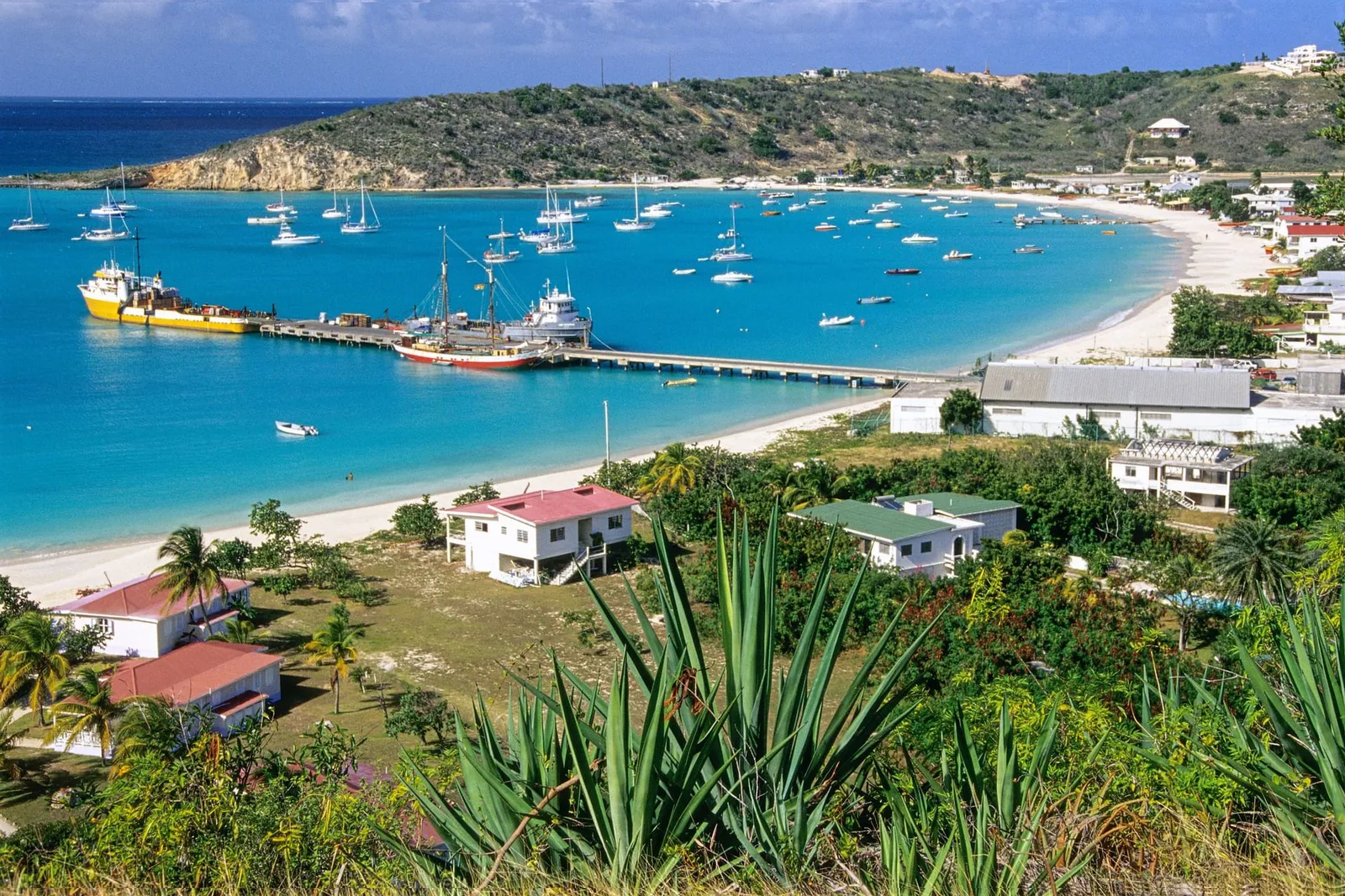
Anguilla is low, flat and ringed by pale sand, with 33 beaches along a coast of coral and limestone. At Maundays Bay in the southwest, the water looks across to the hills of St Martin.
Anguilla is a British Overseas Territory in the northern Leeward Islands, about 26 kilometres long and only a few wide. Without mountains, the beach takes an unusually large role in the holiday. The southwest has long, sheltered crescents such as Maundays Bay, Cove Bay and Rendezvous Bay. The north coast has Meads Bay, the harbour village of Sandy Ground and the cliffs of Little Bay, and at the eastern end Shoal Bay East is famous for its powdery sand and reef snorkelling.

The southwest beaches
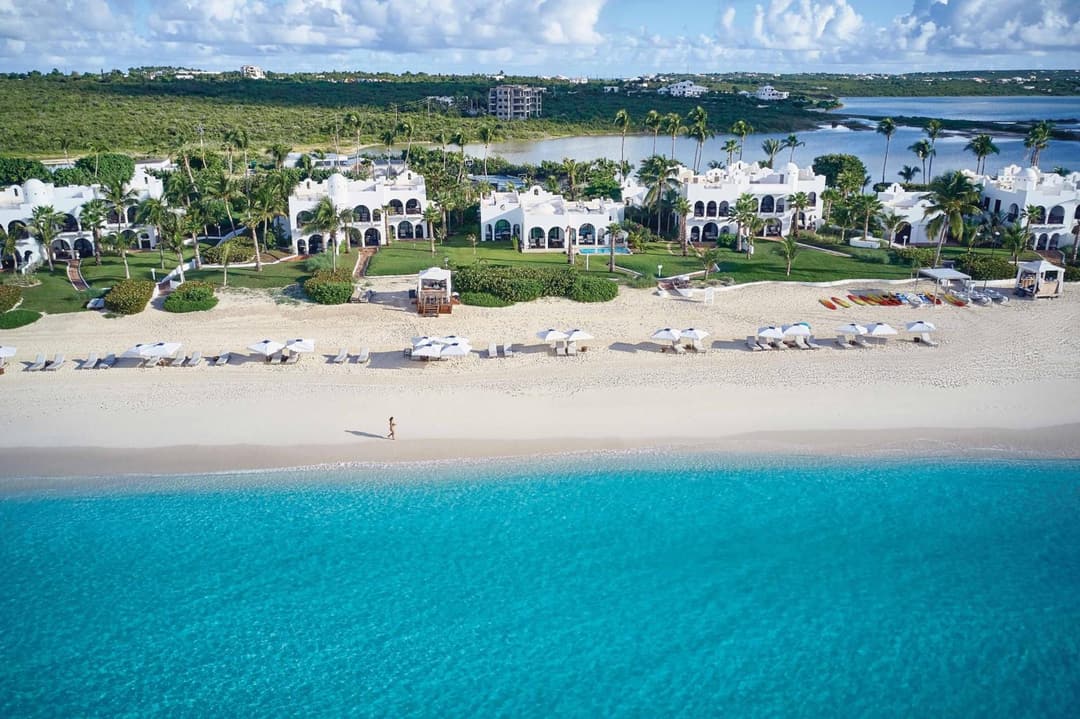
Maundays Bay is a long white crescent facing south across the channel to St Martin, its water usually calm and clear. Cove Bay lies just to the east, and Rendezvous Bay runs for several kilometres beyond. These beaches are made for long walks, swimming and sunset, and much of a stay here is lived at the water's edge.
Explore selectively
A longer stay leaves room for a different beach or a meal elsewhere. From Sandy Ground, boats run to the tiny Sandy Island and the uninhabited Prickly Pear Cays for snorkelling and lunch. Shoal Bay East has some of the island's best reef snorkelling, and Wallblake House in The Valley is the oldest surviving plantation house on Anguilla. Boat racing is the national sport, and the Anguilla Summer Festival in late July and early August centres on the races; in March, the Moonsplash music festival takes over the Dune Preserve at Rendezvous Bay.
The connection and the season
Arrivals use Anguilla's own airport or a connection through St Maarten followed by a boat. Those journeys have different timings, so settle the whole connection before choosing the long-haul flight. Five nights or more suits a beach holiday. Some restaurants and resorts close for part of the late summer and autumn, around the peak of the hurricane season.
Anguilla in pictures
When to go
Anguilla through the year.
- Janbest
- Febbest
- Marbest
- Aprbest
- Maygood
- Jungood
- Julquiet
- Augquiet
- Sepquiet
- Octquiet
- Novgood
- Decbest
Best · Dec, Jan, Feb, Mar, Apr
The driest, most settled period and the main season for a beach holiday.
Good · May, Jun, Nov
Shoulder months with warm water and fewer visitors; showers become more frequent.
Quieter · Jul, Aug, Sep, Oct
The heart of the hurricane season. Some places close for weeks at a time, and plans should follow the forecast.

Each hotel page lists its address, check-in times and the hotel's own transfer times.
Good to know
- A direct Anguilla flight and a St Maarten boat connection are different itineraries with different timings.
- Traffic drives on the left, and a rental car or taxi is the usual way to move between beaches.
- Many restaurants and resorts close for part of September and October.
Practical
Before you go.
- Getting there
- Anguilla (AXA), or St Maarten (SXM) followed by a boat to Blowing Point. Public ferries also cross from Marigot on the French side of St Martin in about 20 to 25 minutes.
- When to go
- December to April for the driest, most settled weather. The official hurricane season runs from June to November.
- Our tip
- Arrange the whole arrival connection before booking the long-haul flight, especially the boat from St Maarten.

Questions
Anguilla, answered.
When is the best time to visit Anguilla?
December to April, when the weather is driest and most settled. June to November is hurricane season, with the highest risk from August to October.
How do I get to Anguilla?
Fly into Anguilla's Clayton J. Lloyd Airport via a regional connection, or fly to St Maarten and take a boat to Blowing Point. Public ferries from Marigot take about 20 to 25 minutes.
Booking help
Planning Anguilla?
Tell us your dates. We will suggest the right hotel and room, and help you book it.