 Independent hotel collection
 USD
 EUR
 GBP
 CHF
 AED
 SGD
 HKD
 THB
 JPY
 AUD
 CAD
 SEK
South Africa · The Lowveld
Luxury hotels in the Greater Kruger
A private reserve, a slower safari.
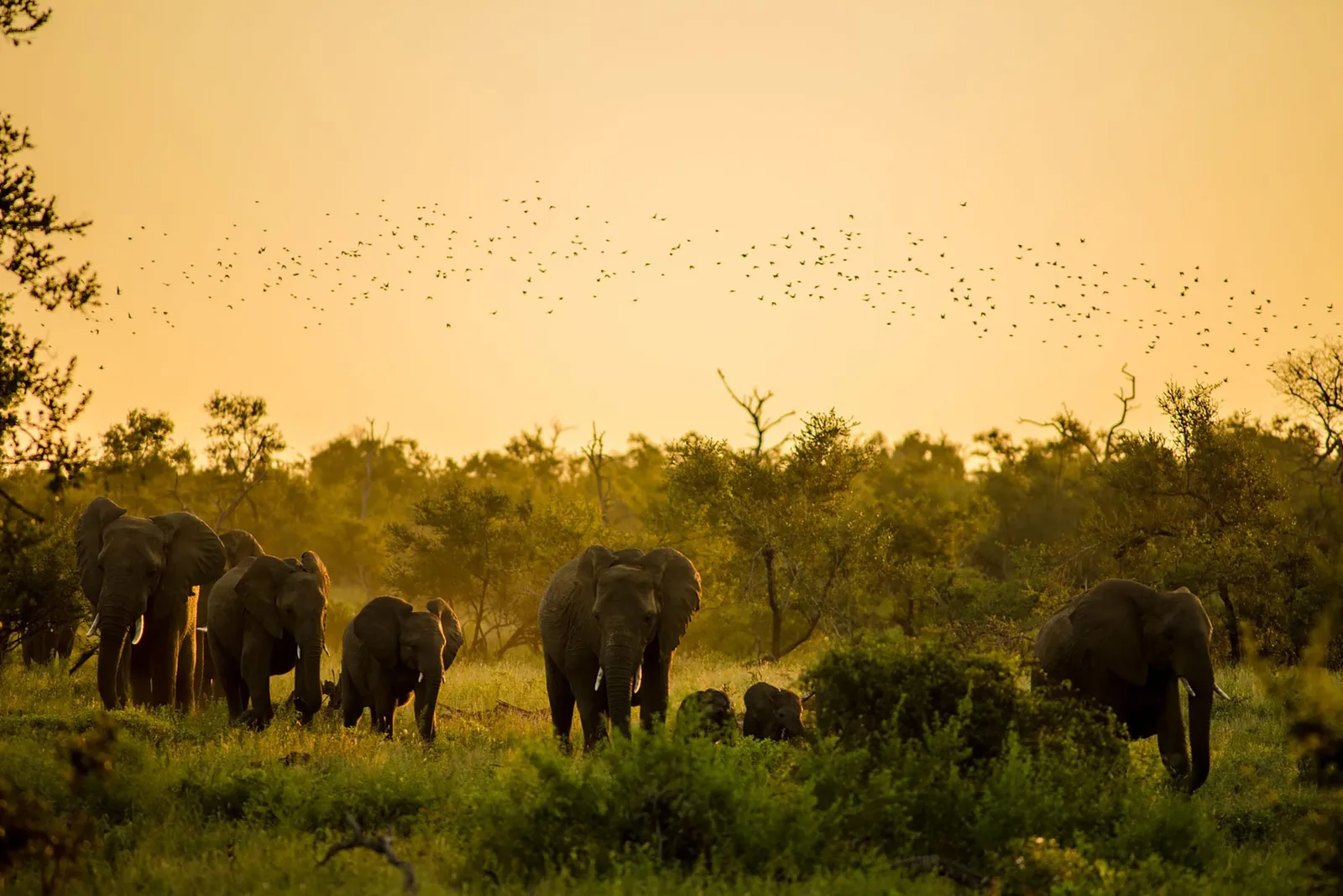
Greater Kruger is a landscape of connected protected areas: the national park and the private reserves along its western edge, with no fences between them. Days here are shaped by the bushveld, the rivers and the guides who know them.
Kruger National Park covers nearly two million hectares of South Africa's Lowveld, running north to south along the border with Mozambique. Along its western boundary, a string of private reserves, among them Sabi Sand, Timbavati, Klaserie and Thornybush, share open borders with the park, so wildlife moves freely across the whole area.
Thornybush, about 14,000 hectares of mopane and acacia bushveld near Hoedspruit, dropped its fence with neighbouring Timbavati in 2017 and is now part of that open system. As in the other private reserves, drives are led by a ranger and tracker, vehicles can leave the road to follow animals, and the number of vehicles at a sighting is limited.

Private reserve or national park
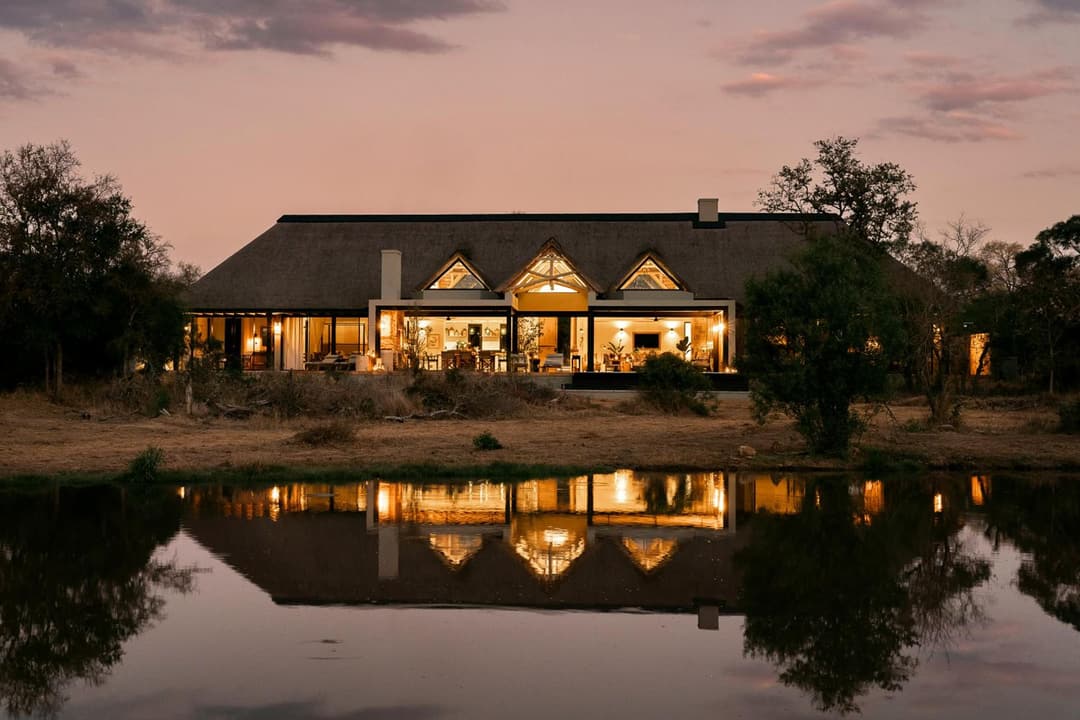
The first distinction is between a privately guided reserve stay and an independent itinerary through the national park. In Kruger itself, visitors drive their own cars on public roads and stay in rest camps. In the private reserves, the lodge, its guides and the open vehicle become the organising point of the day, with off-road driving and evening drives after dark.
Because the fences are down, the same animals move between the park and the reserves. The difference is in how you see them, not what lives there.
The drives are the centre of the day
Safari days begin before sunrise with a long morning drive, often with a stop for coffee in the bush, and end with an afternoon drive that runs into the dark. Guided bush walks show the tracks, plants and smaller creatures that a vehicle passes by.
We suggest at least three nights, with more time for guests who want a slower rhythm or are combining wildlife photography with a broader trip. Repeated drives let a guide respond to changing conditions rather than trying to deliver the entire experience at once.
Around Hoedspruit
Hoedspruit sits at the foot of the Drakensberg escarpment. Above it, the Panorama Route runs past the Blyde River Canyon, the Three Rondavels, Bourke's Luck Potholes and God's Window, a full day out by road.
Closer to the reserves, the Hoedspruit Endangered Species Centre works with cheetah and other threatened animals. The winter months are cooler and drier for these outings; summer brings heat, storms and a greener landscape.
Greater Kruger in pictures
When to go
Greater Kruger through the year.
- Janquiet
- Febquiet
- Margood
- Aprgood
- Maybest
- Junbest
- Julbest
- Augbest
- Sepbest
- Octbest
- Novgood
- Decquiet
Best · May, Jun, Jul, Aug, Sep, Oct
The dry winter. Thinner bush, animals gathering at water and cool early drives.
Good · Mar, Apr, Nov
Transition months, as the rains arrive or fade and the vegetation changes.
Quieter · Dec, Jan, Feb
The green summer, with heat, afternoon storms, newborn animals and migrant birds.

Each hotel page lists its address, check-in times and the hotel's own transfer times.
Good to know
- The private reserves share open borders with Kruger National Park, so wildlife moves freely between them.
- Greater Kruger is a malaria area, with higher risk in the wet summer months. Speak to a travel doctor before you go.
- Early drives in winter are cold in an open vehicle. Bring warm layers, a hat and gloves.
- Hoedspruit is the closest airport to the central private reserves.
Practical
Before you go.
- Getting there
- Hoedspruit (HDS) has direct flights from Johannesburg and Cape Town, about 45 minutes by road from Thornybush. Kruger Mpumalanga International (MQP) near Mbombela is an alternative for the southern reserves.
- When to go
- May to October is the dry winter, with thin bush and animals near water. November to March is the hot, green summer, with rain, newborn animals and migrant birds.
- Our tip
- Add a day on the Panorama Route above the Blyde River Canyon, a short drive from Hoedspruit.

Questions
the Greater Kruger, answered.
Is a private reserve better than Kruger National Park?
They share the same wildlife. Private reserves add guided drives, off-road tracking and night drives; the national park suits independent self-drive travellers.
When is the best time for a safari in Greater Kruger?
May to October, when the bush is thin and animals gather at water. The green summer has newborn animals and birdlife, with more heat and rain.
How long should I stay?
Our suggested minimum is three nights, with more time for a slower safari. Fewer bases give a better sense of a place than repeated transfers between lodges.
Booking help
Planning the Greater Kruger?
Tell us your dates. We will suggest the right hotel and room, and help you book it.