 Independent hotel collection
 USD
 EUR
 GBP
 CHF
 AED
 SGD
 HKD
 THB
 JPY
 AUD
 CAD
 SEK
Morocco · The red city
Luxury hotels in Marrakech
Marrakech, inside and beyond the walls.
A walled medina of souks, palaces and hidden courtyard gardens at the foot of the High Atlas, with garden suburbs, mountains and desert all within an easy drive.
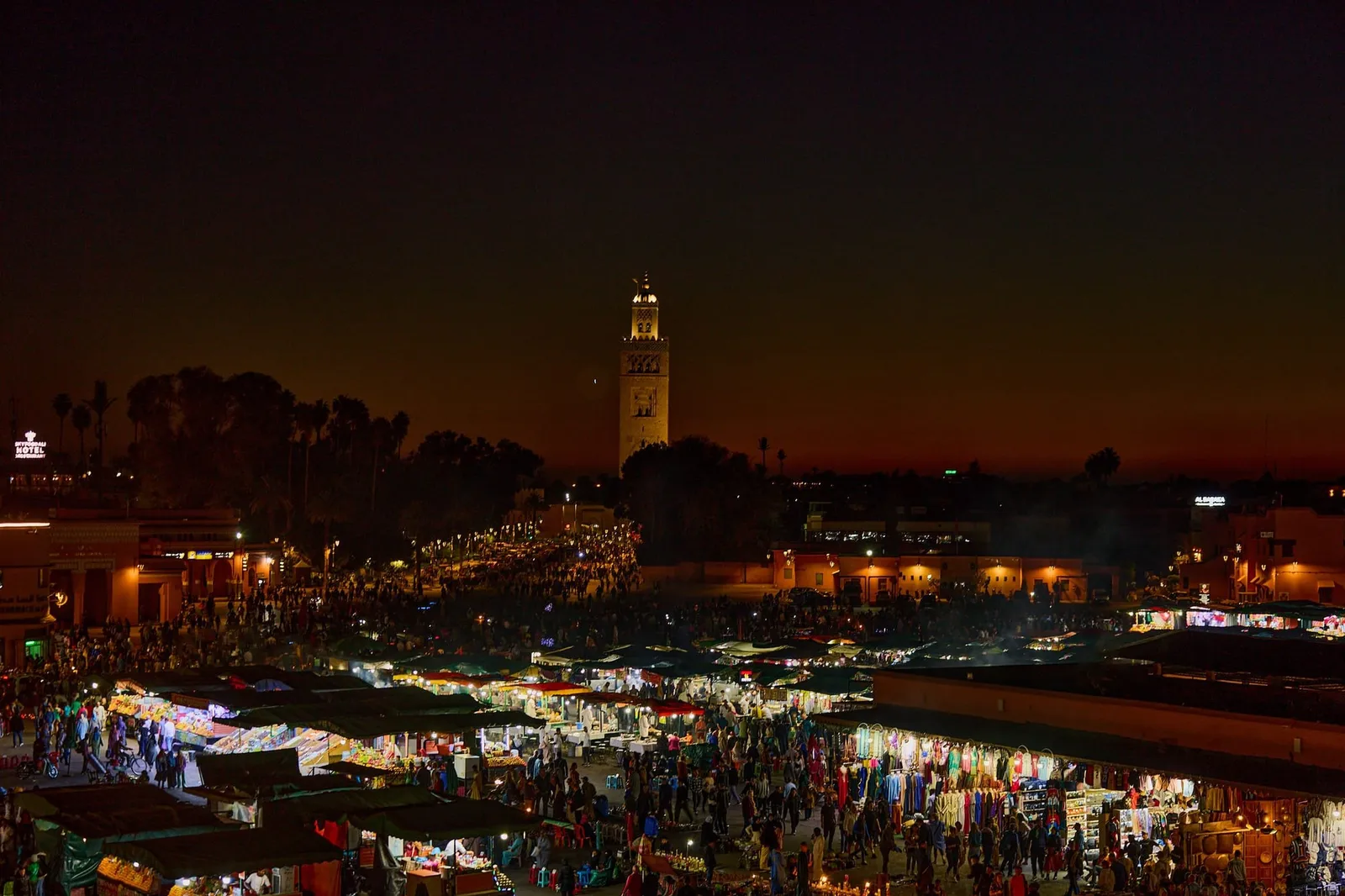
Marrakech is two cities side by side. The medina, a UNESCO World Heritage Site, is enclosed by kilometres of ochre ramparts, with Jemaa el-Fnaa at its heart and the minaret of the Koutoubia mosque as the landmark everyone steers by. Outside the walls, the French-era districts of Guéliz and Hivernage have wide avenues, galleries, cafés and contemporary restaurants.
The old city rewards early mornings, before the heat and the crowds. The souks spread north of Jemaa el-Fnaa in lanes sorted by trade: leather, metalwork, spices, textiles. The Ben Youssef Madrasa, the Bahia Palace and the Saadian Tombs show the city's craftsmanship in tile, carved cedar and stucco, and Le Jardin Secret is a restored riad garden in the middle of the medina. In Guéliz, the Jardin Majorelle and the Musée Yves Saint Laurent sit side by side.
Afternoons are for shade and stillness, evenings for the square, when food stalls and musicians take over Jemaa el-Fnaa. Beyond the city, the Agafay desert is under an hour away, and the Ourika Valley and the villages around Imlil lead up into the High Atlas, snow-capped in winter.

Know the city
Where to base yourself.
Sidi Mimoun and the walls
The southwestern edge of the medina near the Koutoubia, where ramparts meet garden avenues, a short walk from Jemaa el-Fnaa.
The medina
Souks, palaces, madrasas and Jemaa el-Fnaa; best explored slowly and on foot.
Hivernage and Guéliz
Wider streets, gardens, galleries and contemporary dining beyond the old city.
The Palmeraie
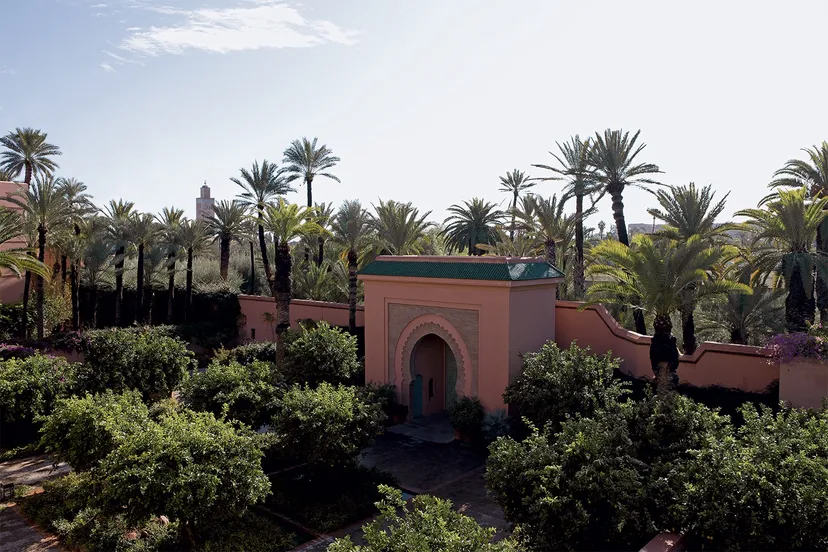
Palm groves and walled estates north of the city, a quiet drive from the centre.
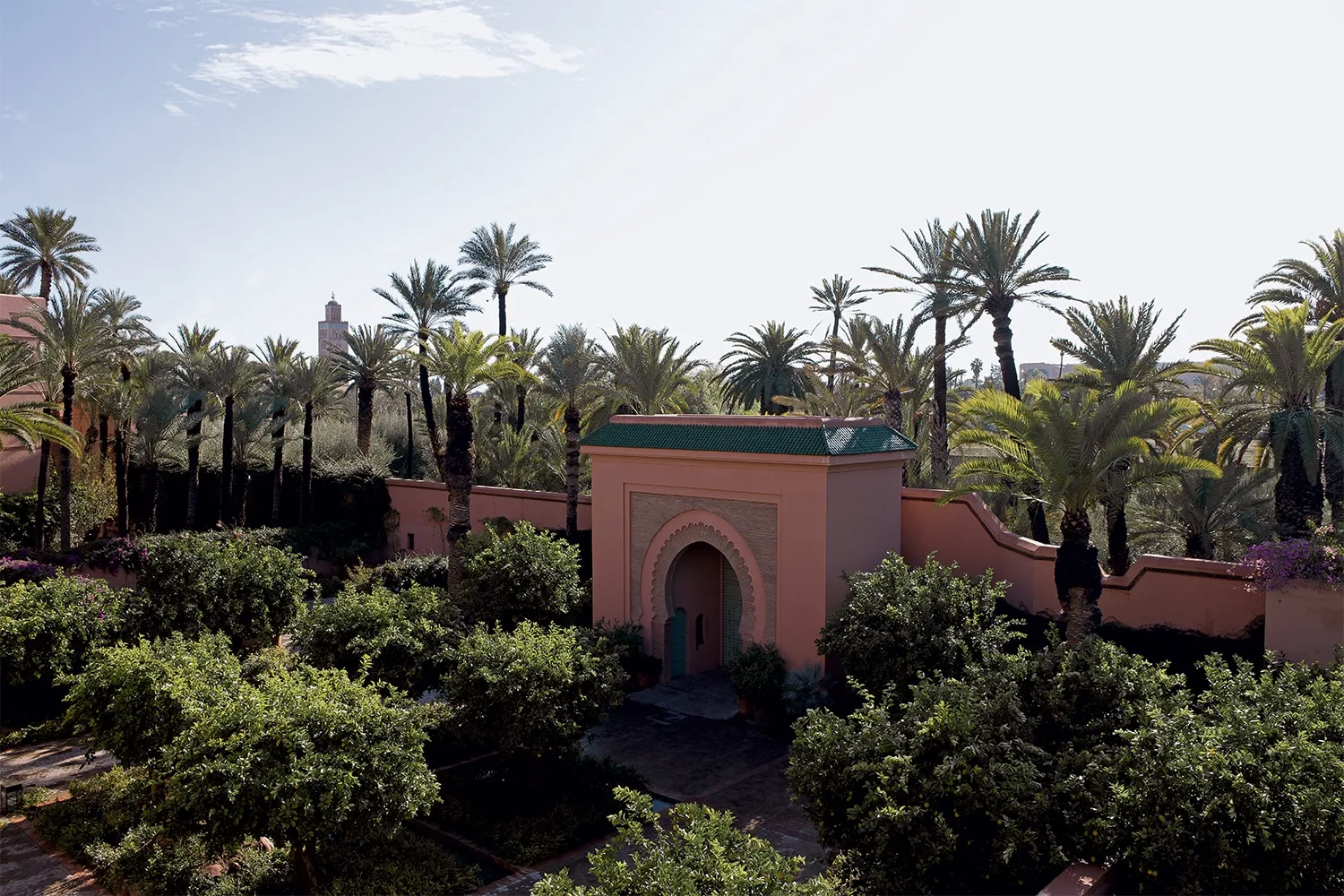
Marrakech in pictures
When to go
Marrakech through the year.
- Jangood
- Febgood
- Marbest
- Aprbest
- Maybest
- Junquiet
- Julquiet
- Augquiet
- Sepbest
- Octbest
- Novbest
- Decgood
Best · Mar, Apr, May, Sep, Oct, Nov
Warm days make the medina, gardens and terraces comfortable to explore.
Good · Dec, Jan, Feb
Cooler days and cold evenings, with snow on the High Atlas; carry a layer after sunset.
Quieter · Jun, Jul, Aug
Very hot afternoons make early outings and long, shaded middays the rule.

Each hotel page lists its address, check-in times and the hotel's own transfer times.
Good to know
- Cars cannot enter most medina lanes, so the last stretch to a riad or restaurant is often on foot.
- Jemaa el-Fnaa changes through the day: quiet in the morning, busiest after dark when the food stalls open.
- The Jardin Majorelle and the Musée Yves Saint Laurent are in Guéliz; book timed tickets ahead in busy months.
- The High Atlas, the Ourika Valley and the Agafay desert all make easy day trips.
Practical
Before you go.
- Getting there
- Marrakech Menara Airport (RAK) is only a few kilometres southwest of the medina, a short drive from the old city gates.
- When to go
- Spring and autumn are the most comfortable seasons for walking. Summer afternoons can be very hot.
- Our tip
- Go into the souks early with a local guide on the first morning. The medina makes sense far faster once someone has shown you its landmarks.

Questions
Marrakech, answered.
When is the best time to visit Marrakech?
Spring and autumn are the most comfortable for walking the old city. Summer stays work best with early outings and a slower afternoon.
Should I stay inside the medina or outside it?
Inside or by the walls puts the souks and Jemaa el-Fnaa on foot. Hivernage and the Palmeraie are calmer and easier by car, but every trip into the old city becomes a drive.
Booking help
Planning Marrakech?
Tell us your dates. We will suggest the right hotel and room, and help you book it.