 Independent hotel collection
 USD
 EUR
 GBP
 CHF
 AED
 SGD
 HKD
 THB
 JPY
 AUD
 CAD
 SEK
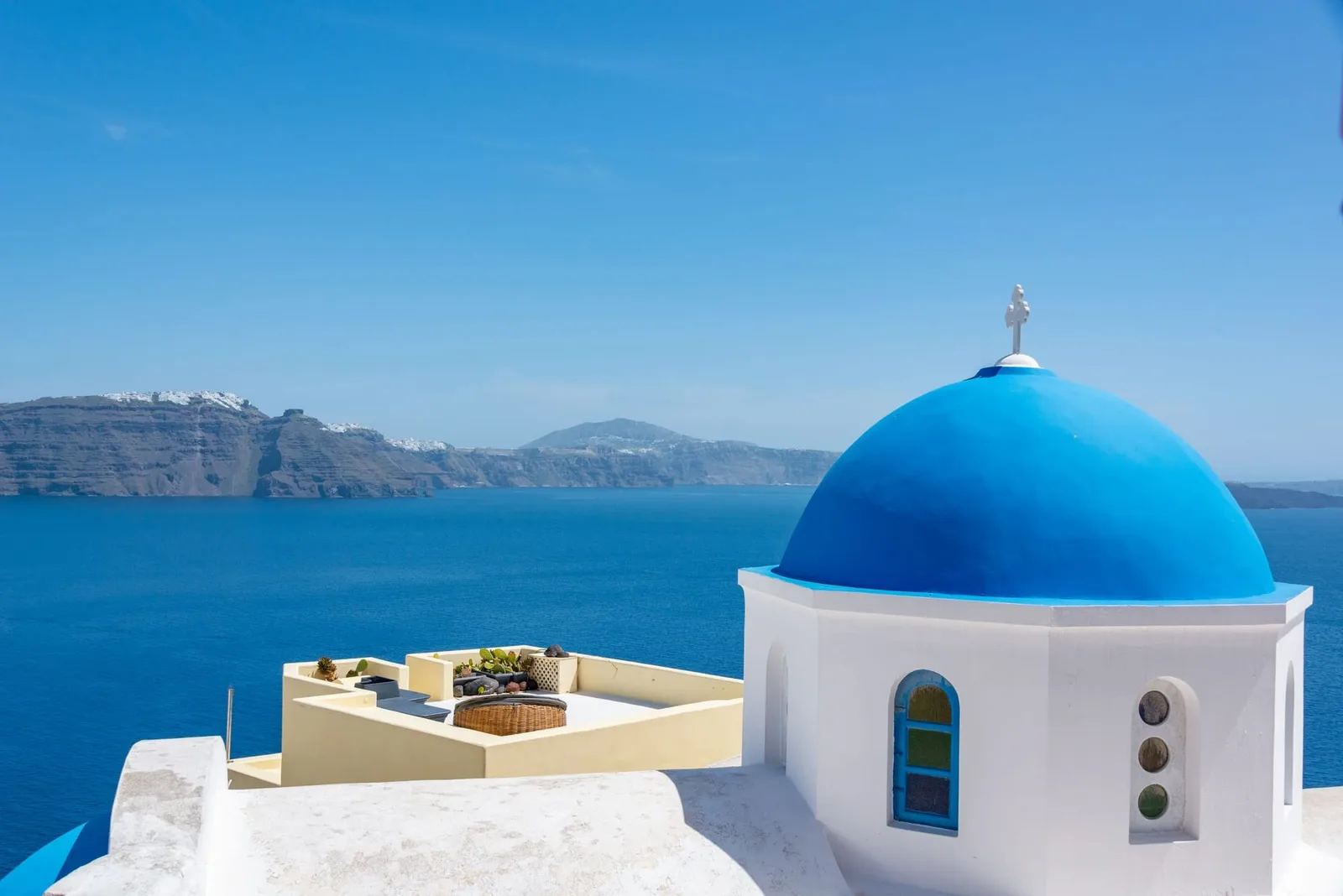
Greece · The caldera
Luxury hotels in Santorini
The cliff and the quieter edge of Oia.
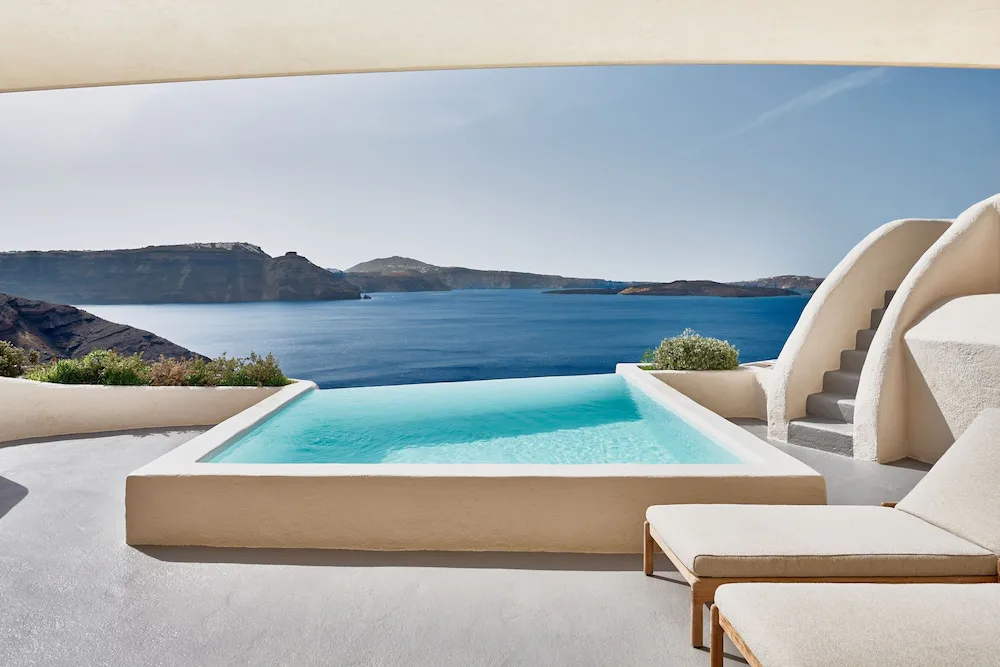
Santorini is the rim of a sunken volcano: villages line the cliffs above a flooded caldera, while the outer slopes fall gently to black sand beaches and vineyards. Oia, at the northern tip, faces the sunset across the water.
Santorini's crescent shape is the result of a Late Bronze Age eruption that collapsed the centre of the island into the sea. The inner side is a wall of cliffs, with the villages of Fira, Firostefani, Imerovigli and Oia strung along the top, and the volcanic islets of Nea and Palea Kameni in the middle of the bay. The outer side slopes towards the Aegean, with wine villages such as Pyrgos and Megalochori inland and long beaches of dark volcanic sand at Kamari and Perissa.
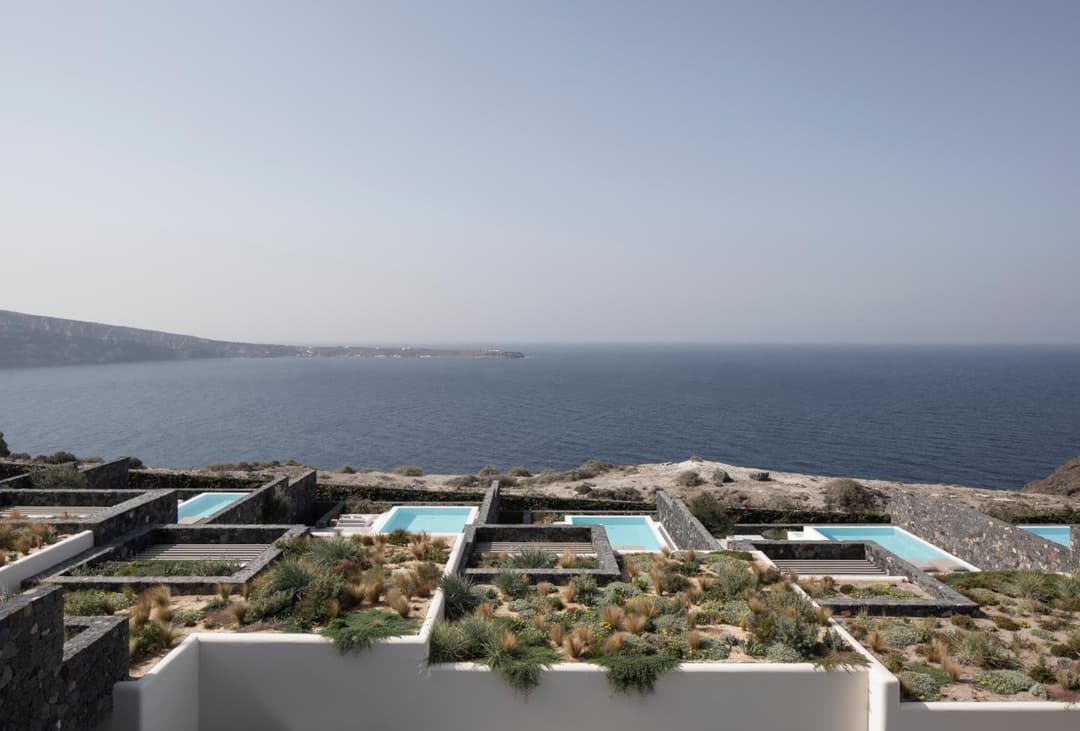
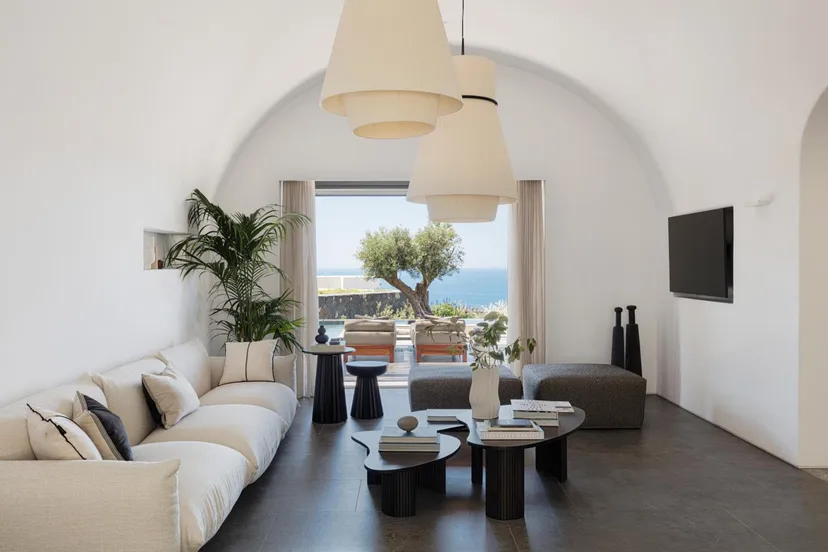

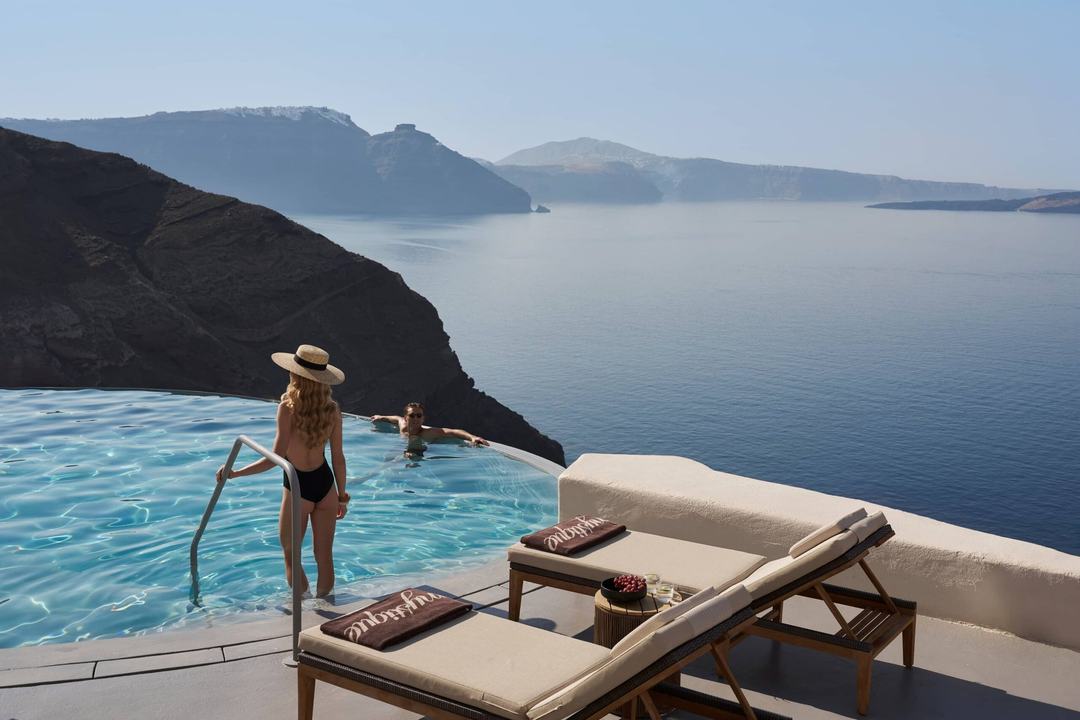

Oia on the caldera rim
Oia's lanes run along the cliff edge in a line of white houses, blue domes and old captains' mansions, with the ruined castle at the tip as the classic sunset point. In summer the evening crowds are heavy, and the quieter hours are early morning. Many houses are reached by steps rather than level paths, which matters for anyone with limited mobility.
Ammoudi and the edge of town
Below Oia, a long stone stairway of a few hundred steps zigzags down to Ammoudi, a tiny harbour of fish tavernas set against red volcanic rock. From there a path leads round the headland towards the islet of Agios Nikolaos, a popular swimming spot. The slopes outside the main village are quieter, with more space and wider sea views to the north and west.
Keep some of the island outside the frame
The caldera path from Fira to Oia is about 10 kilometres and takes three to five hours, passing Imerovigli and the detour to Skaros Rock. Boat trips cross to the volcano on Nea Kameni and the warm springs off Palea Kameni. In the south, the excavated Bronze Age town of Akrotiri was preserved under volcanic ash, and its finds are shown at the Museum of Prehistoric Thera in Fira. Three or four nights is a good first stay; in July and August, explore early and keep the afternoon slow.
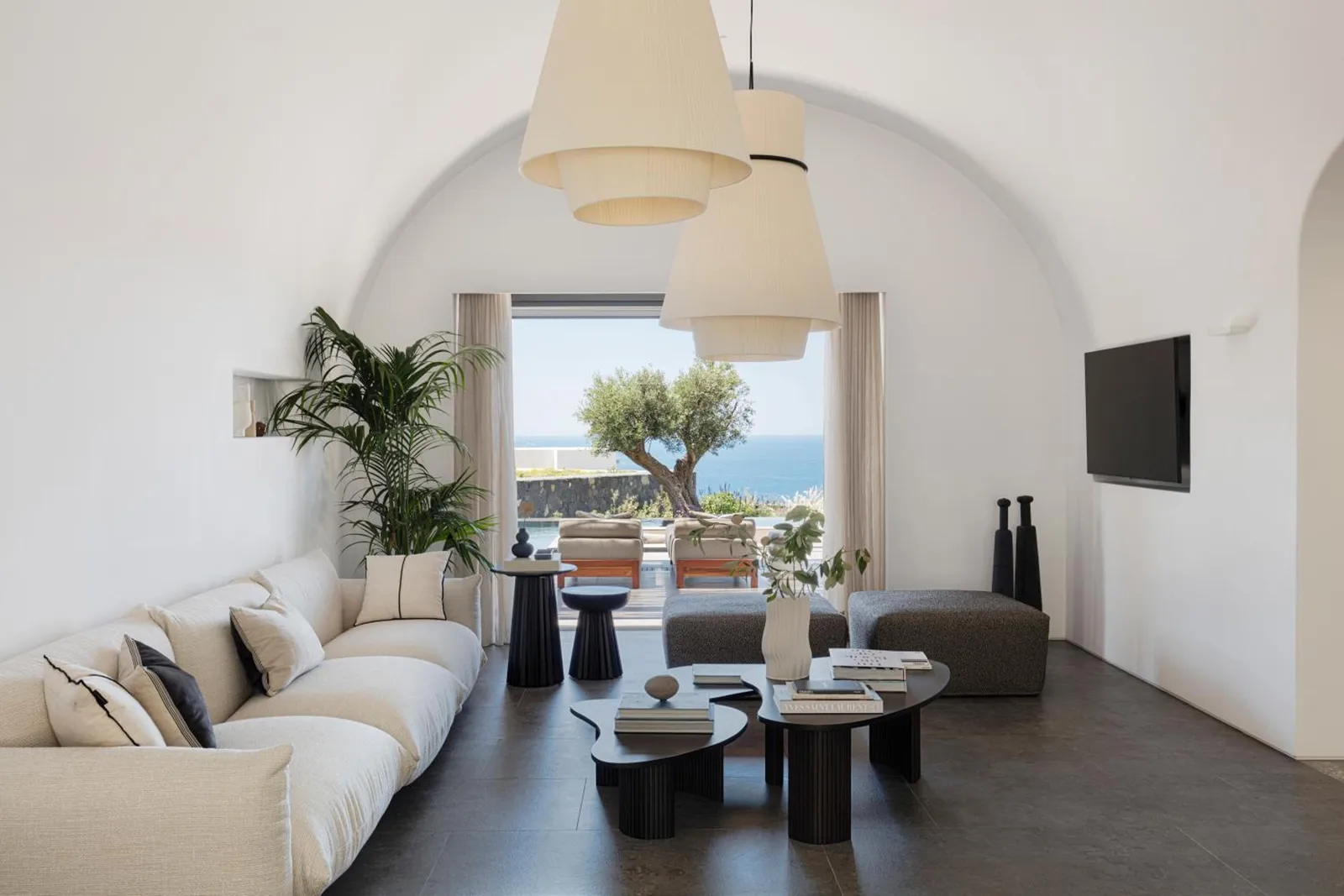
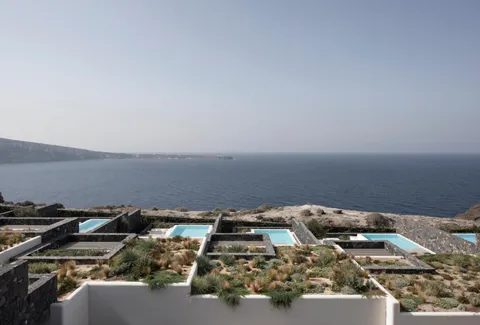
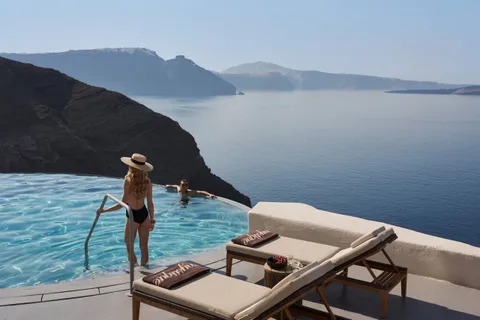
Santorini in pictures
When to go
Santorini through the year.
- Janquiet
- Febquiet
- Marquiet
- Aprquiet
- Maybest
- Junbest
- Julgood
- Auggood
- Sepbest
- Octquiet
- Novquiet
- Decquiet
Best · May, Jun, Sep
Warm days and a calmer island for walking, boat trips and long evenings.
Good · Jul, Aug
Hot, busy weeks, often with the strong meltemi wind; explore early and keep the afternoon slow.
Quieter · Oct, Nov, Dec, Jan, Feb, Mar, Apr
Many restaurants, boat trips and island services close or reduce outside the main season, and ferry schedules are thinner.
Getting there
Arriving in Santorini.
Each hotel page lists its address, check-in times and the hotel's own transfer times.
Good to know
- A caldera view faces the volcano and the inner bay; a sea-and-sunset view may face open water to the west or north.
- The caldera villages are built on cliffs, with many steps between lanes and houses.
- Flights land at the airport near Kamari; ferries use Athinios port, below the cliffs south of Fira.
Practical
Before you go.
- Getting there
- Santorini Airport (JTR), or ferries to the port of Athinios from Piraeus and other Cyclades islands, followed by a road transfer.
- When to go
- Late spring and early autumn for a mixed stay; July and August are hot, windy and busy.
- Our tip
- Walk part of the caldera path from Fira towards Oia in the morning, before the heat and the crowds.
On the map
Where the hotels are
Questions
Santorini, answered.
Where should I base myself on Santorini?
Oia for the northern sunset and a quieter edge beyond the main lanes, Fira or Imerovigli for a central position on the caldera, and the south and east coasts for beaches and vineyards.
How long should I stay?
Three or four nights for a first visit: enough for the caldera walk, a boat trip, Akrotiri and unhurried evenings.
Booking help
Planning Santorini?
Tell us your dates. We will suggest the right hotel and room, and help you book it.